Generative modeling
Correctness defined first, as the statistics an output must reproduce, and only then tuning.
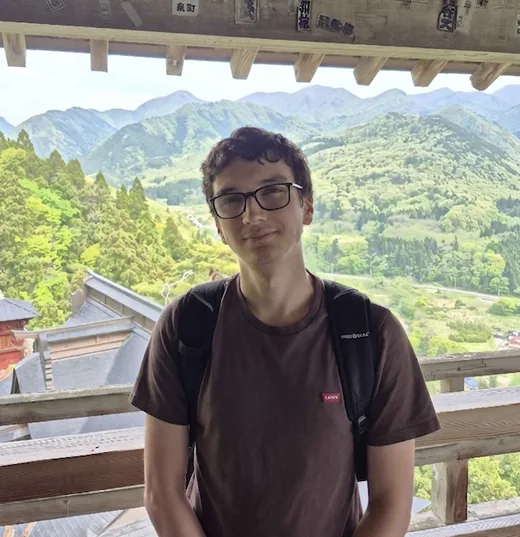
Machine Learning Researcher — ÉTS Montréal
I build learning systems and evaluate them carefully, from diffusion models for geophysical data to whole-body representations that help robots avoid collisions. I am most interested in methods that carry across domains rather than ones built for a single application.
Currently a research intern at the LiNCS Laboratory (ÉTS) and a research assistant in the Correll Lab (CU Boulder). B.Eng. Software Engineering, ÉTS, expected May 2027.
Correctness defined first, as the statistics an output must reproduce, and only then tuning.
What a policy should learn from sensing beyond vision, as in PC-ACT's whole-body proximity representation.
Models that run where and when they are needed, from live video analysis to local LLM inference.
Models over video, speech and text, and explanations that show which input drove a prediction.
Under reviewIEEE RA-L 2026
An action-chunking transformer policy that adds pre-contact proximity sensing from the whole arm to vision and proprioception.
In preparationRSS 2027
Low-cost fingertip sensing that lets a robot hand adapt its grasp as it closes on an object.

ÉTS × Boxing Canada2025 – 2026
Real-time biomechanical video analysis for Boxing Canada's Olympic coaching staff: XMem segmentation for fast, occluded footage, fine-tuned pose estimation, and a fourfold latency cut for live feedback.
PyTorch · XMem · OpenCV · Pose estimation

Quminex2026
A UNet diffusion model with localized self-attention that generates synthetic geomagnetic fields, trained on 68,000 GeoTIFF tiles and judged on spatial statistics: RAPS log-MAE 0.080, variogram NMAE 0.158.
PyTorch · Diffusion · rasterio

Open sourceApr 2026
Evolutionary code generation with local LLMs: a program database with checkpoint and resume, staged evaluation, and generated code run in hardened Docker and gVisor sandboxes.
Python · Ollama · Docker · gVisor
B.Eng.Expected May 2027
École de technologie supérieure (ÉTS), Montréal
Coursework in data structures and algorithms, intelligent systems, mathematical programming, parallel computing and quantum programming.
Award2025
C$15,000, with Own the Podium
Funded the Olympic boxing analytics research at ÉTS.
Sep 2026
Submitted PC-ACT to IEEE RA-L.
Sep 2026
Started a research internship in explainable AI at the LiNCS Laboratory, ÉTS.
Jun 2026
Gave a workshop on boxing AI and sports analytics at the Institut national du sport (INS Québec).
Apr 2026
Released GemmaEvolve, evolutionary code generation with local LLMs.
Mar 2026
Acknowledged in Shaw et al., “Cutting the Cord”.